

Learn to use Blender for Visual Investigation and 3D Reconstruction
And Turn Your Investigative Data Into an Accurate 3D Scene That Anyone Can View, Verify and Audit.
Discover & learn the method behind the model: measurements, calibration, alignment, documentation. Start with our comprehensive knowledge base which provides free, open access for self-paced learning, or speed things up with 1-on-1 coaching or team workshops. Designed for beginners as well as professionals in visual investigation, investigative journalism, academic research, and human rights documentation.
Custom Training
1-on-1 coaching and team workshops structured around your (active) investigation.
Inquire About TrainingConsulting
Come with a dataset, a case, or just an idea. Book a free 30-minute consultation to see what we, and Blender, can do with it.
Book a Free ConsultationDeveloped in collaboration with


The Open Knowledge Base
An evolving library covering 3D theory, Blender fundamentals, investigative workflows, and tool and add-on guides, built around a verification-first methodology.
3D & Blender Foundations
A course on core 3D concepts: file types, camera and perspective, spatial logic, and the anatomy of a model. Plus Blender basics: navigation, shortcuts, workspace customization, and working in object and edit mode.
Tool & Add-On Documentation
Covering external tools like QGIS, COLMAP, fSpy, Google Earth Pro, Postshot, ComfyUI and Spirula Studio. A large collection of Blender add-ons specifically useful in the investigative context, including BlenderGIS, Kiri 3DGS, VR Scene Inspection, Blender MCP and basics like LoopTools, Bool Tool, etc.
Workflows & Data Management
A methodology for handling investigation data, informed by the Berkeley Protocol on Digital Open Source Investigations. Covers collecting, preserving, verifying and analyzing material, plus evidence logging, file organization and collaboration.
Investigative Techniques & Use Cases
Covering an ever growing list of topics like Camera Matching, Geolocation and Chronolocation, Photogrammetry, Gaussian Splatting, Situated Testimonies, Terrain Reconstruction, and hand-modeled reconstruction from reference.
The Problems of Learning Blender
Most people in OSINT recognize Blender as a powerful tool: one that can draw all types of data into a single coherent whole, opening up new perspectives on a case, better analysis, and clearer communication. But where, and how, to start?
Style vs. Accuracy
Most Blender tutorials are written for game developers and VFX artists, where the goal is aesthetic (dramatic lighting, visual shortcuts, whatever renders well). Investigative reconstruction asks for something else: dimensional accuracy, scale fidelity, geometry that holds up to scrutiny. A convincing model isn't the same as a verifiable one.
Clean 3D vs. Chaotic Multi-Source Data
Blender has the tools for investigation, camera solvers, lens grids, geospatial references, but no built-in workflow that ties them together for a defensible scene. Every practitioner pieces together their own pipeline from unrelated disciplines. The result is only as solid as the method behind it, and that method is rarely written down.
Cost of the Learning Curve
Most Blender learning paths assume unlimited free evenings and months of trial and error. You don't have that much time, and the standard route costs more than you can spare. Our training is built to fit the hours you actually have.
Solution: Modular Training Built Around Real Cases
We can work directly on your own data, your case. Confidential by default. We adjust to your evidence, your deadlines, and the output you need.
No (active) case to bring? We can draw on a selection of documented investigations and build a path around what you want to focus on. Working with real material teaches faster than abstractions, which is why we prefer it whenever possible.
How your case material is handled
Case files are stored on encrypted storage and never shared with third parties. Sessions and calls are not recorded. Only the team member you work with, plus any network specialists you explicitly engage, see your material. When the work ends, you decide: keep the files, receive them, or have them destroyed.
Investigation-Focused Learning Path
Training built around dimensional accuracy, scale fidelity, and reproducible geometry rather than aesthetic plausibility. Modules covering camera calibration, geospatial alignment, point-cloud integration, and other investigative techniques, in the order that suits your work.
Documented, Reproducible Workflows
Every step is explained and documented: camera calibration, lens distortion correction, geospatial alignment. Learn how to build a pipeline that can be reviewed and replicated, not just a final outcome.
Direct Expert Guidance
1-on-1 calls, screen-sharing, and custom walkthroughs from someone doing this work. Avoid the trial and error of piecing together tutorials from unrelated domains. Get focused support when you need it.
Testimonials
Read what previous participants have said about their experience with the Blender for Visual Investigation course.
“Incredible support. Boudewyn made Blender's complexity manageable through patient 1-on-1 help and tailored resources. Way beyond what I expected.”
A Collaboration with the Oxford Border Criminologies Institute and the Border Violence Monitoring Network
Our training methods are used in academic research. As an example: Seven volunteers from Border Violence Monitoring Network were trained through our structured programme to reconstruct detention spaces that are otherwise inaccessible. Read about it or have a look at the models produced.
Oxford Border Criminologies Institute
"The training programme was designed to be accessible, modular, and replicable. Participants were introduced to Blender and related tools through step-by-step modules — this allowed people with no prior experience in 3D modelling to contribute meaningfully."
Petrou Ralli, Xanthi, Amygdaleza, Corinth, and Samos detention centres — reconstructed from satellite imagery, photographs, and witness testimonies.
Real World Use Case Examples
Disclaimer: These examples have not been created by people who followed this course, nor are they associated with the course. They are simply real-world cases where Blender was used within the context of visual investigation.
Russian Missile Identified in Kyiv Children's Hospital Attack
This example from Bellingcat showcases a powerful application of 3D modeling in visual investigation. By creating a precise model of a Kh-101 missile in Blender, researchers were able to directly compare its proportions and key features with photographic evidence of the missile that struck the Okhmatdyt Children's Hospital.
Read moreThe Team
A core team in 3D reconstruction and investigative methodology, extended case by case through our network of independent researchers, academics and field experts.
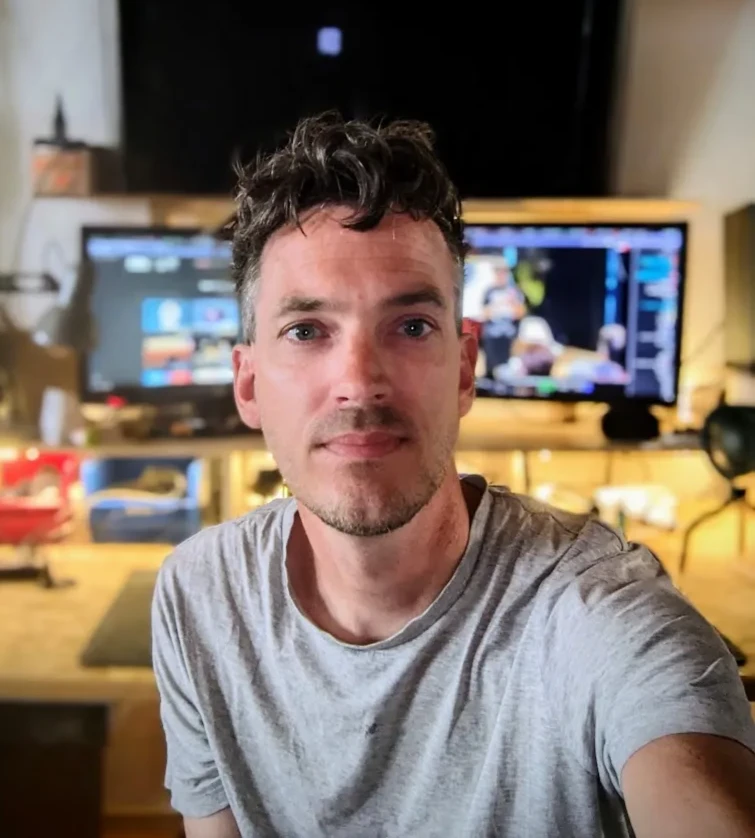
Boudewyn
3D Specialist & Investigative Visualizer
Founded BVI in 2024 with the conviction that investigative 3D workflows should be accessible, clear, and adaptable for anyone looking to uncover stories, patterns, and evidence through visual means.
With over ten years of Blender experience, he has since applied and taught BVI's methodology across multiple cases, collaborating with groups and individuals in journalism, NGOs, academia and investigative teams.
He holds bachelor's degrees in philosophy and interactive media design.
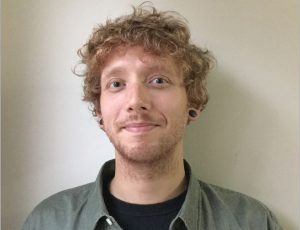
Dr. P. Teunissen
Research & Methodology Partner
Border scholar and postdoctoral researcher working at the intersection of OSINT, ethnography, and visual investigation.
He is a member of Border Forensics and a collaborator with the Border Violence Monitoring Network.
He combines FOIA requests, open-source techniques, visual analysis, and ethnography to translate complex investigations into 3D reconstructions that hold up in both academic and advocacy contexts.
Training for Individuals and Teams
Whether you're working solo or with a team, we build training around your project. All options include one-on-one support, custom curriculum, and flexible delivery.
Live Co-Working Sessions
For solo investigators, journalists and researchers
Structured 1-2 hour sessions where you perform the exercise live while I guide you in real time. The work happens in the session, not after it.
Team Workshops
For organizations and teams
Intensive group sessions for teams who need to build internal capacity. Custom content, on-site or remote delivery, and follow-up support.
Extended Programs
For complex reconstructions and long-term projects
Multi-week programs with structured learning, weekly mentoring, and hands-on support for complex reconstructions.
All Training Includes
One-on-One Support
Direct access to instructor for questions and problem-solving
Fully Customizable
Curriculum built around your project, data, and goals
Flexible Delivery
On-site or remote, in Dutch, German, or English
Pricing based on project scope - inquire for a custom quote
Frequently Asked Questions
Find answers to common questions about our Blender for Visual Investigation training