Shireen Abu Akleh — Shooting Reconstruction
Provenance
| Source | Organisation & people | Link |
|---|---|---|
| Investigation | Forensic Architecture | forensic-architecture.org |
Introduction
Forensic Architecture rebuilt the killing of journalist Shireen Abu Akleh as an analyzable 3D scene. The model combines a drone photogrammetry scan with blockout buildings and vehicles. It tests whether the shooter could have seen the journalists and their PRESS vests from the shooter's position.
Research questions: Who killed Shireen Abu Akleh? Was the shooting intentional or accidental? Did the shooter(s) know they were targeting journalists? Were the journalists clearly identifiable as press? Could their PRESS vests be seen from the shooter's position?
Subject: The extrajudicial killing of a journalist.
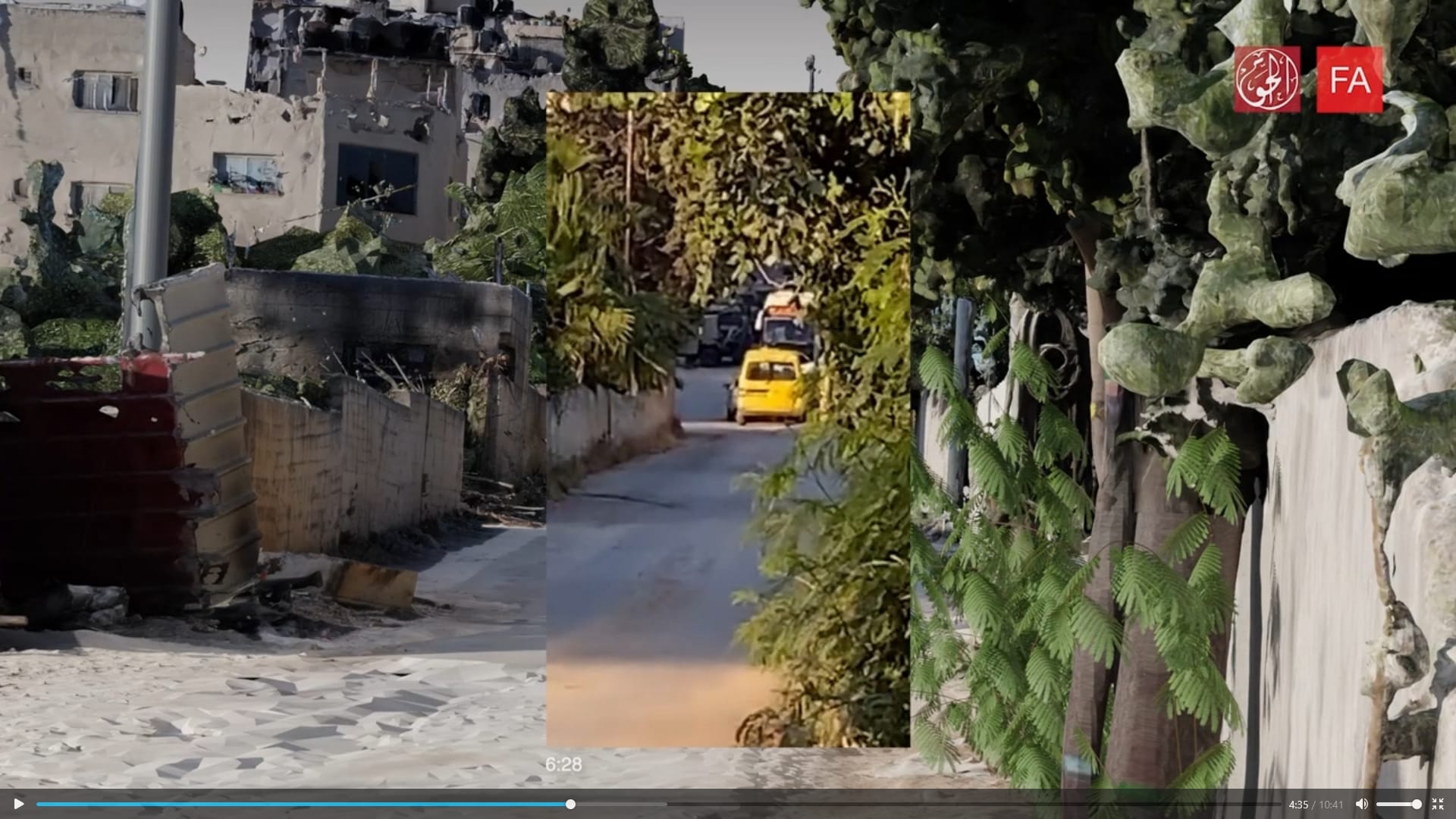 Photomatch
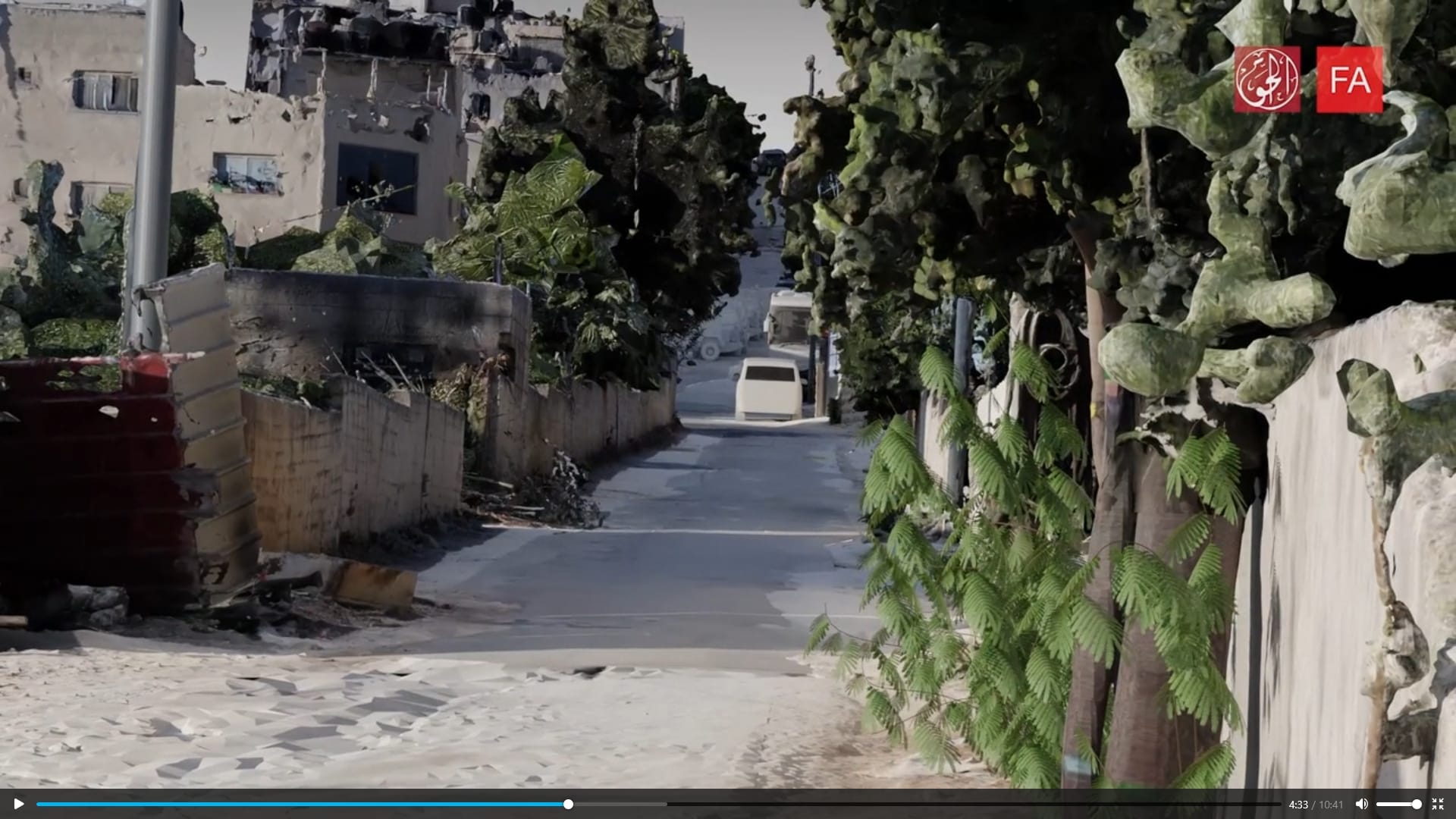 Base Model
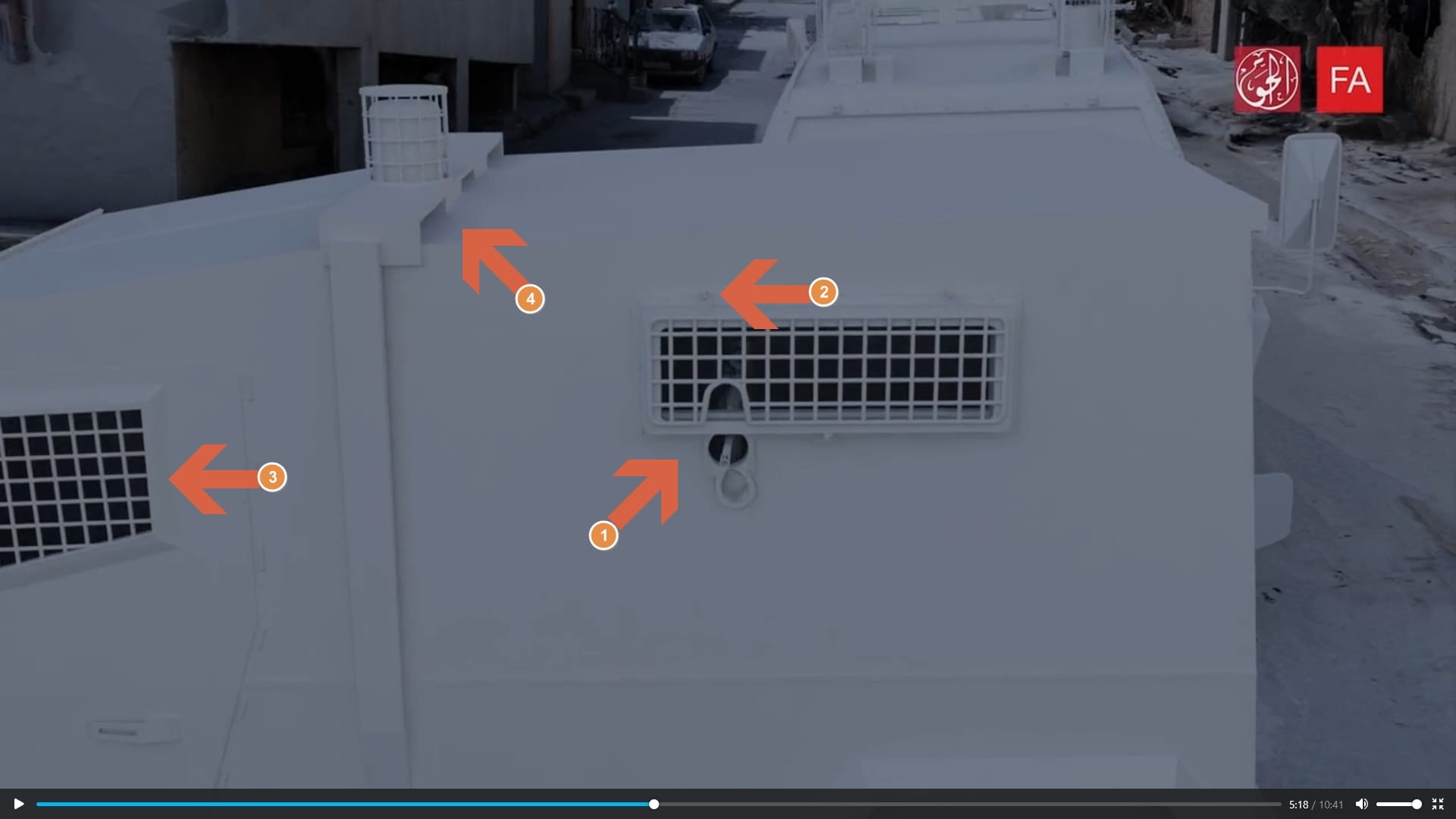 Different Level of Detail1 & 2 seem to have a higher level of detail than 3 & 4. Since points 1 & 2 are more relevant to the reconstruction, this might indicate the model was hand-made for this case
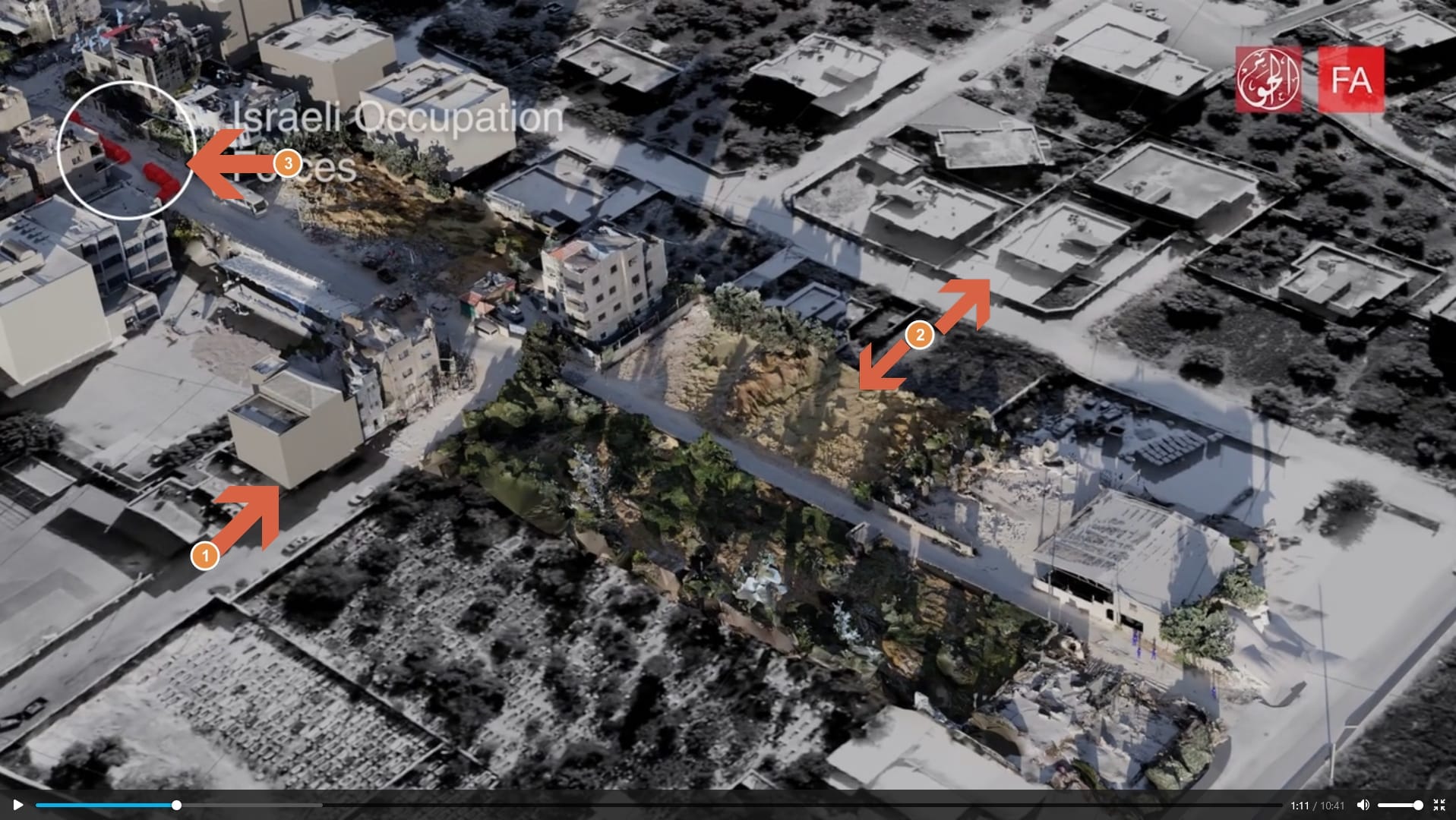
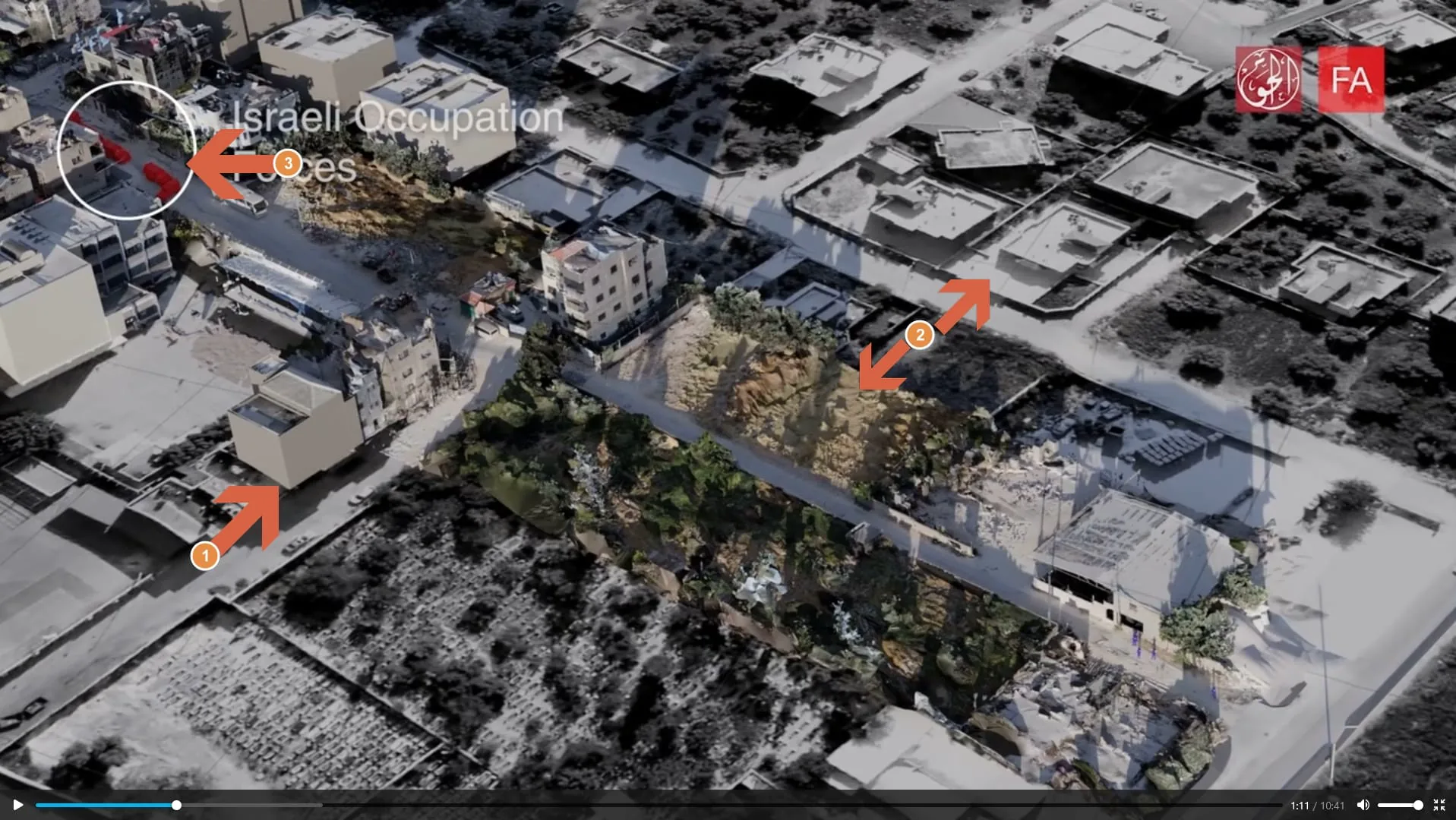 Scene ReconstructionOverview of the incident location.
 PhotogrammetryDrone scan of the street.Different Level of Detail1 & 2 seem to have a higher level of detail than 3 & 4. Since points 1 & 2 are more relevant to the reconstruction, this might indicate the model was hand-made for this caseScene ReconstructionOverview of the incident location.
Workflow
- Base model is a detailed photogrammetry scan by drone, plus some on-the-ground scanning (tree), placed on top of satellite imagery.
- Blockout models of buildings were added to the photogrammetry scene.
- Presumably matched the sun position to the time of the incident (shadow directions differ).
- Modeled or sourced military vehicles.
- Modeled or sourced additional vehicles.
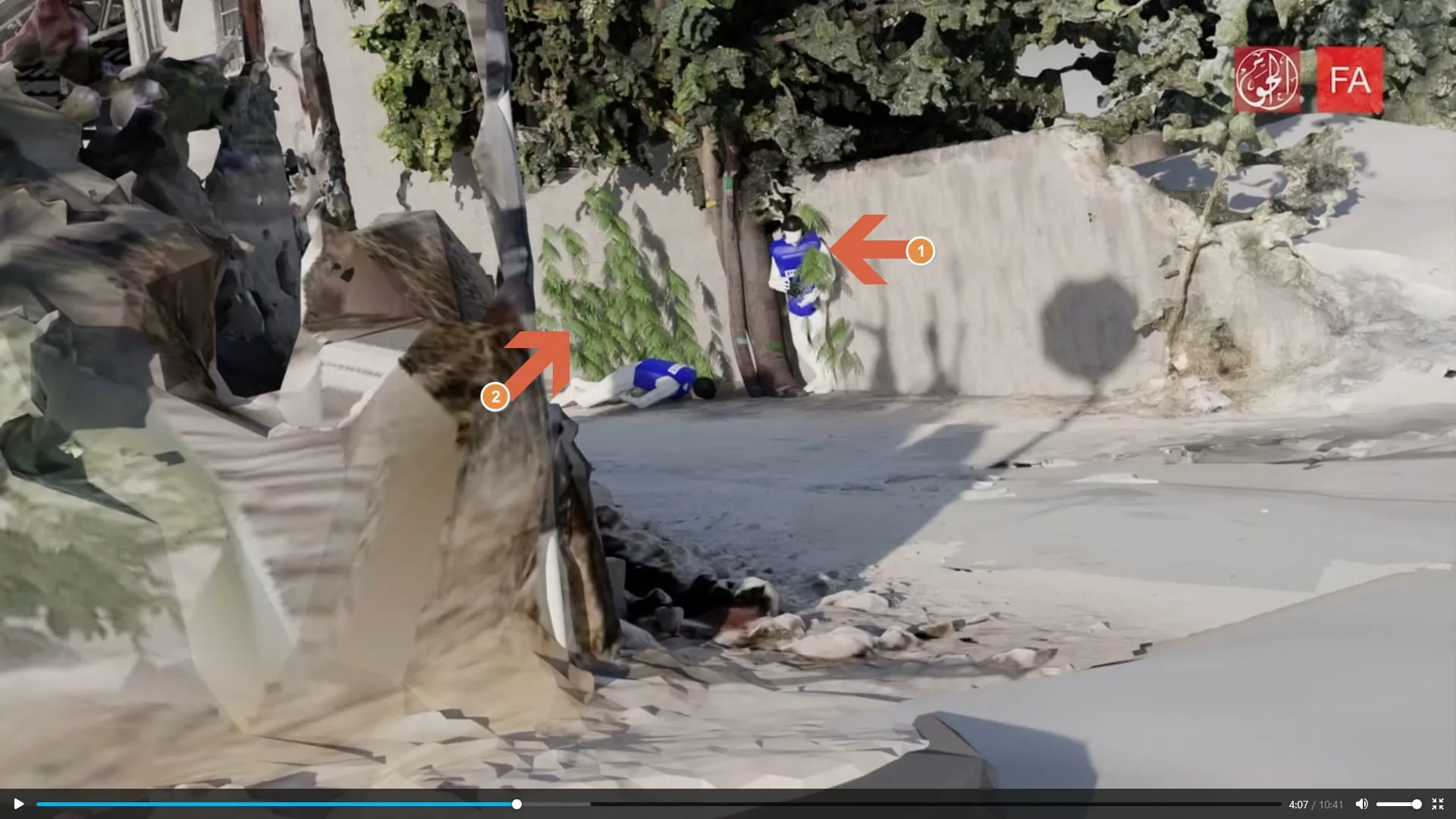
- Posed and positioned human reference models in static scenarios according to timeline.
- Field-of-view and trajectory modeling.
Techniques
- Static images: used to capture the position of actors, no animation.
- Vests: modeled and textured.
- Foliage: modeled or sourced. This level of detail would not have been captured by a photogrammetry scan, since photogrammetry is poor with the intricacies of foliage.
- Car: low level of detail.
- Bus: high level of detail, likely a sourced model (interior is visible — too time-consuming to do by hand and doesn't play a role in answering the question).
- Analysis: modeled bullet trajectories and line-of-sight.
Summary
This case combines photogrammetry-based scene capture with analytic visualization (field of view, line of sight, ballistics, witness-perspective verification) to test whether the shooter could have known the targets were journalists.
Resources
- Photogrammetry — the drone scan that forms the base
- Camera Matching — placing footage into the scene
- Measurements — distances in the reconstruction
- Precision Modeling — vehicles and detail objects
Sources
- Forensic Architecture — Shireen Abu Akleh — the investigation this page reconstructs