Reconstructing the Melilla Massacre
USE CASE
📖2 min read
Provenance
| Source | Organisation & people | Link |
|---|---|---|
| Investigation | Lighthouse Reports | lighthousereports.com |
Introduction
Lighthouse Reports rebuilt the Melilla border fence tragedy as a 3D scene. The reconstruction places a digital elevation model under a modular border fence and the surrounding terrain. It shows how repeating elements were instanced across the scene instead of modeled one by one.
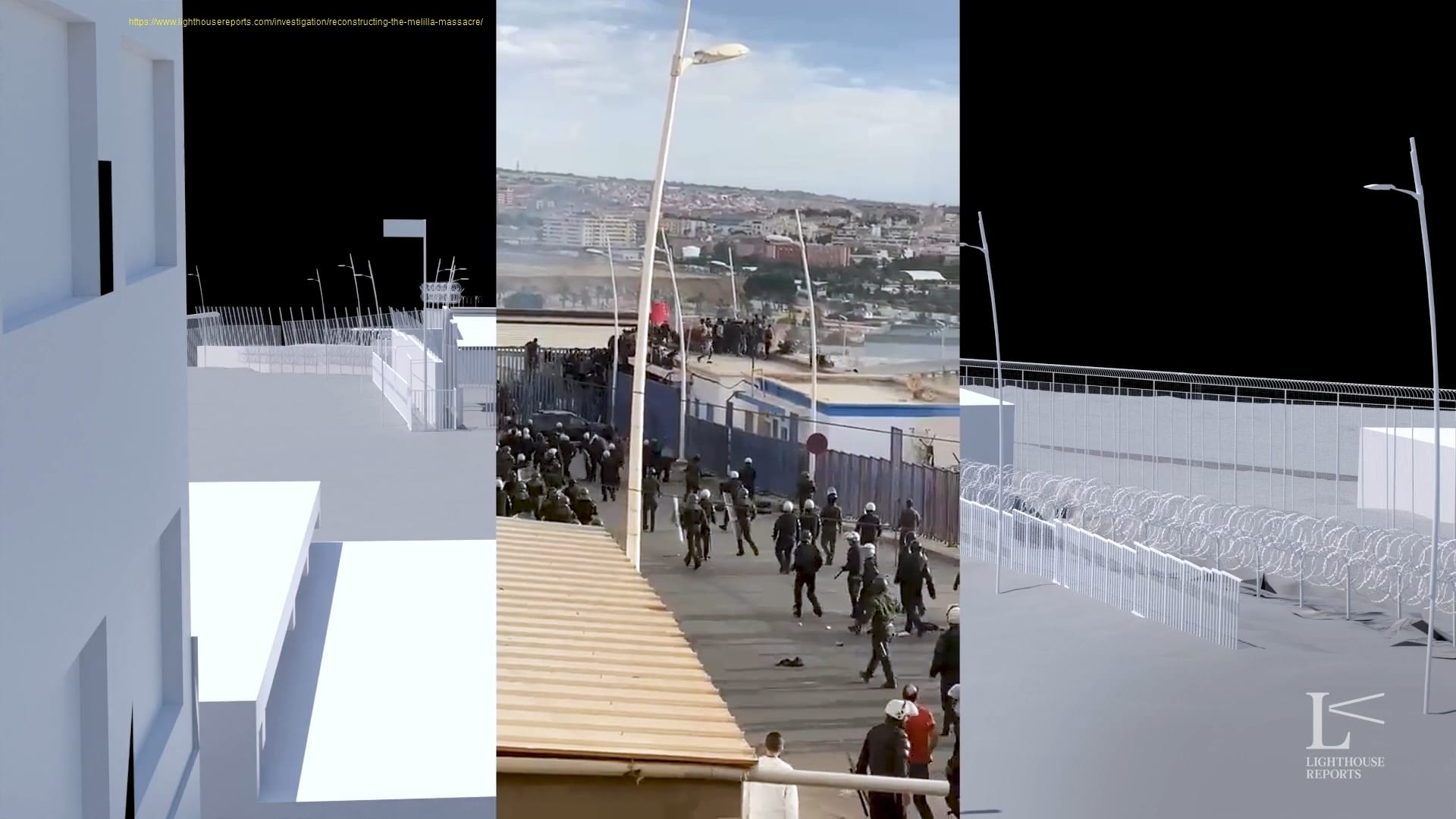 Photomatch
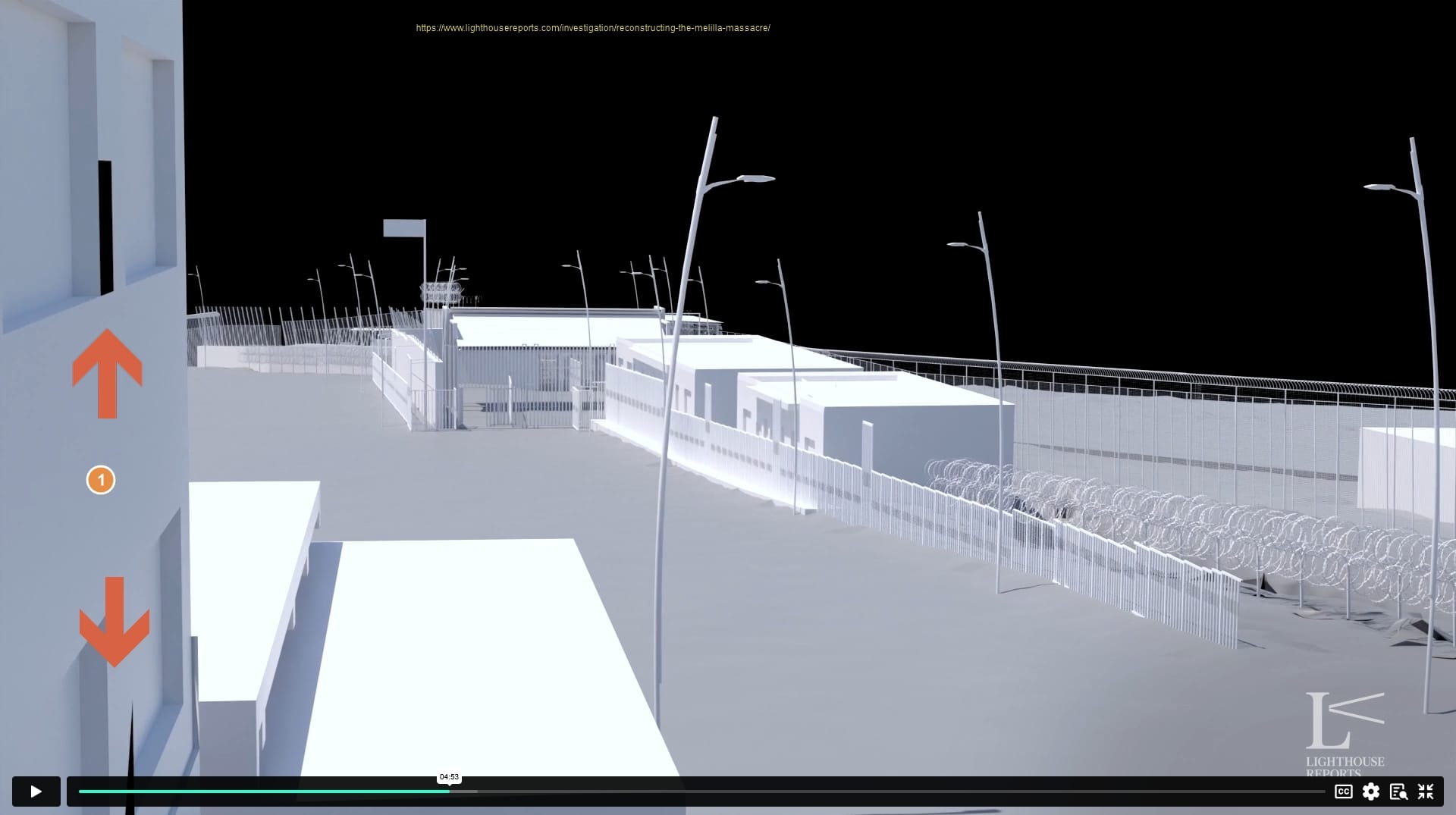 Base Model
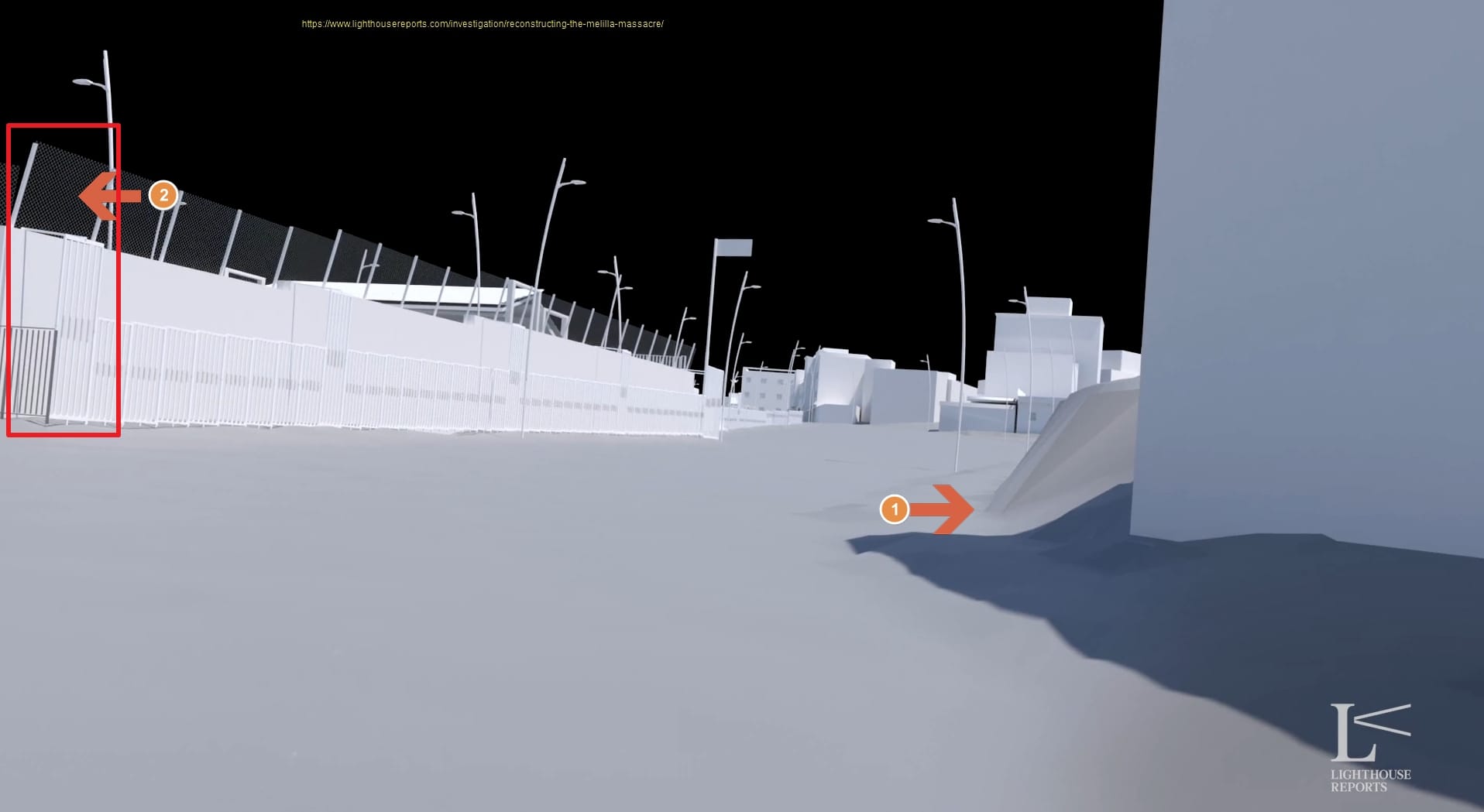
 PhotomatchAnother example of how photomatches are often approximationsDEM & Repeating PatternsA detailed Digital Elevation Map (possibly QGIS export) was used (1) as well as a chain-link fence (2), which could be a material (with alpha applied) or a procedural model
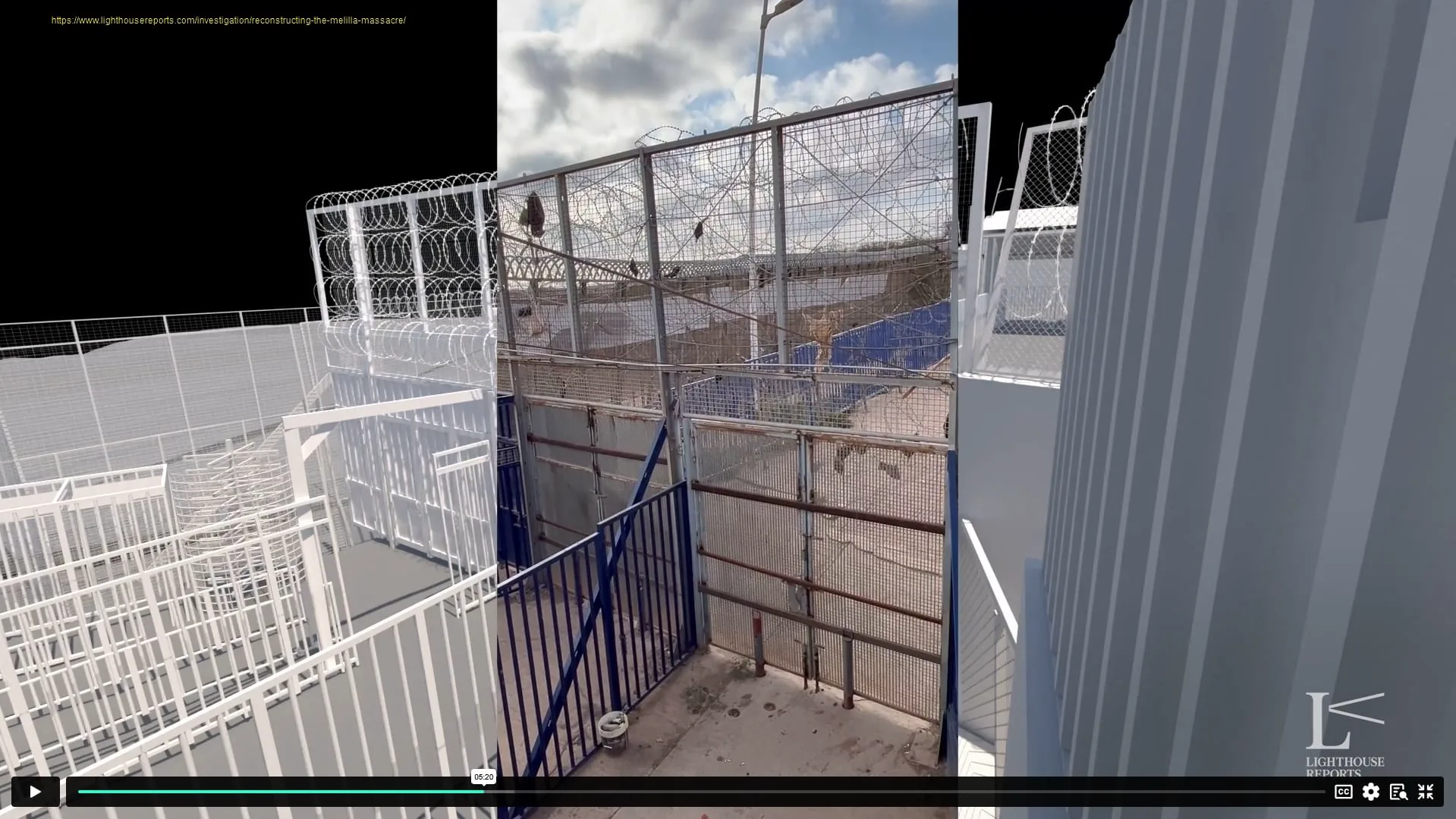
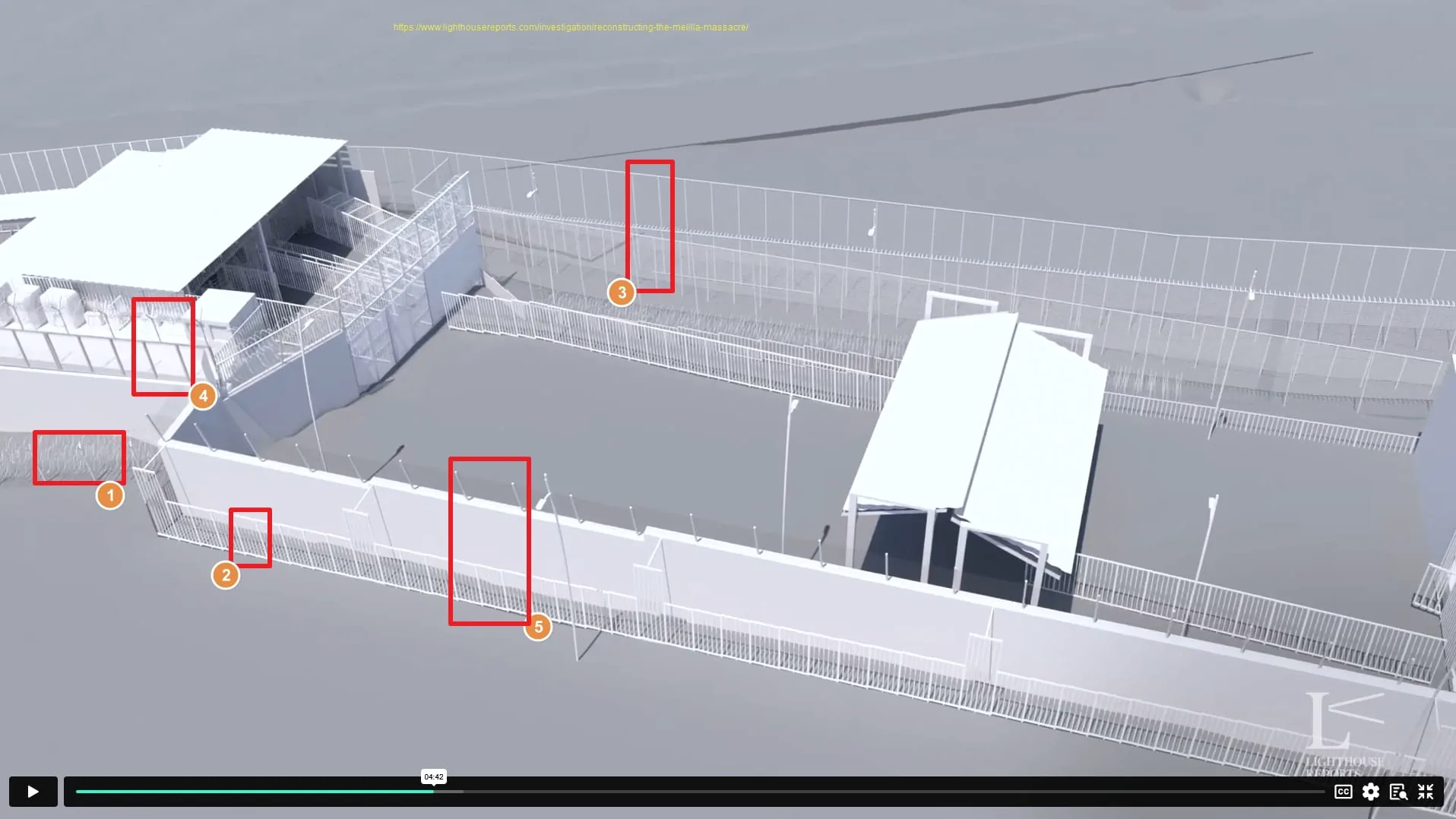 Modular Pieces(1) Barbed wire, which is hard to model by hand, probably modular and procedural, or just procedural. (2 to 5) Examples of how this location relies heavily on repeating, modular pieces.PhotomatchAnother example of how photomatches are often approximationsDEM & Repeating PatternsA detailed Digital Elevation Map (possibly QGIS export) was used (1) as well as a chain-link fence (2), which could be a material (with alpha applied) or a procedural model
1 / 4
Observations (likely)
- Repeating parts: a lot of repeating parts.
- Barbed wire: difficult to model by hand — likely procedural, modular, or a combination of both.
- Fences: same logic. The parts and chain links would likely be procedural, fitted into a single fence piece, then instanced (linked copy) across the scene.
- Lamp posts: same approach — linked instances of a base model placed across the scene many times.
- Building: simple geometry, with either shading errors or missing faces.
- Terrain: modeled on top of a digital elevation map (likely exported from QGIS), or modeled flat first and overlaid with the DEM afterward.
Summary
This case demonstrates terrain-from-DEM and procedural/instancing-heavy modeling — where efficiency comes from building one modular element and instancing it across the scene rather than modeling each instance by hand.
Resources
- Terrain & Landscape Generation — building the ground from a DEM
- Procedural Modeling — the fence and repeating elements
- QGIS — preparing the elevation data
- Geolocation — placing the scene
Sources
- Lighthouse Reports — Reconstructing the Melilla Massacre — the investigation this page reconstructs