Smoke and Lies — 3D Model & Smoke Simulation
Provenance
| Source | Organisation & people | Link |
|---|---|---|
| Investigation story | Global Investigative Journalism Network (GIJN) | gijn.org |
Introduction
GIJN's visual-forensics team rebuilt the interior of a detention center after the deadly fire there. They matched the building's CCTV camera angles inside the model. A smoke simulation then tested the official account of how the deaths happened.
Likely research question: Can we disprove the official government narrative that deaths occurred because "the key was missing"?
Subject: Detailed 3D model of the interior of a detention center.
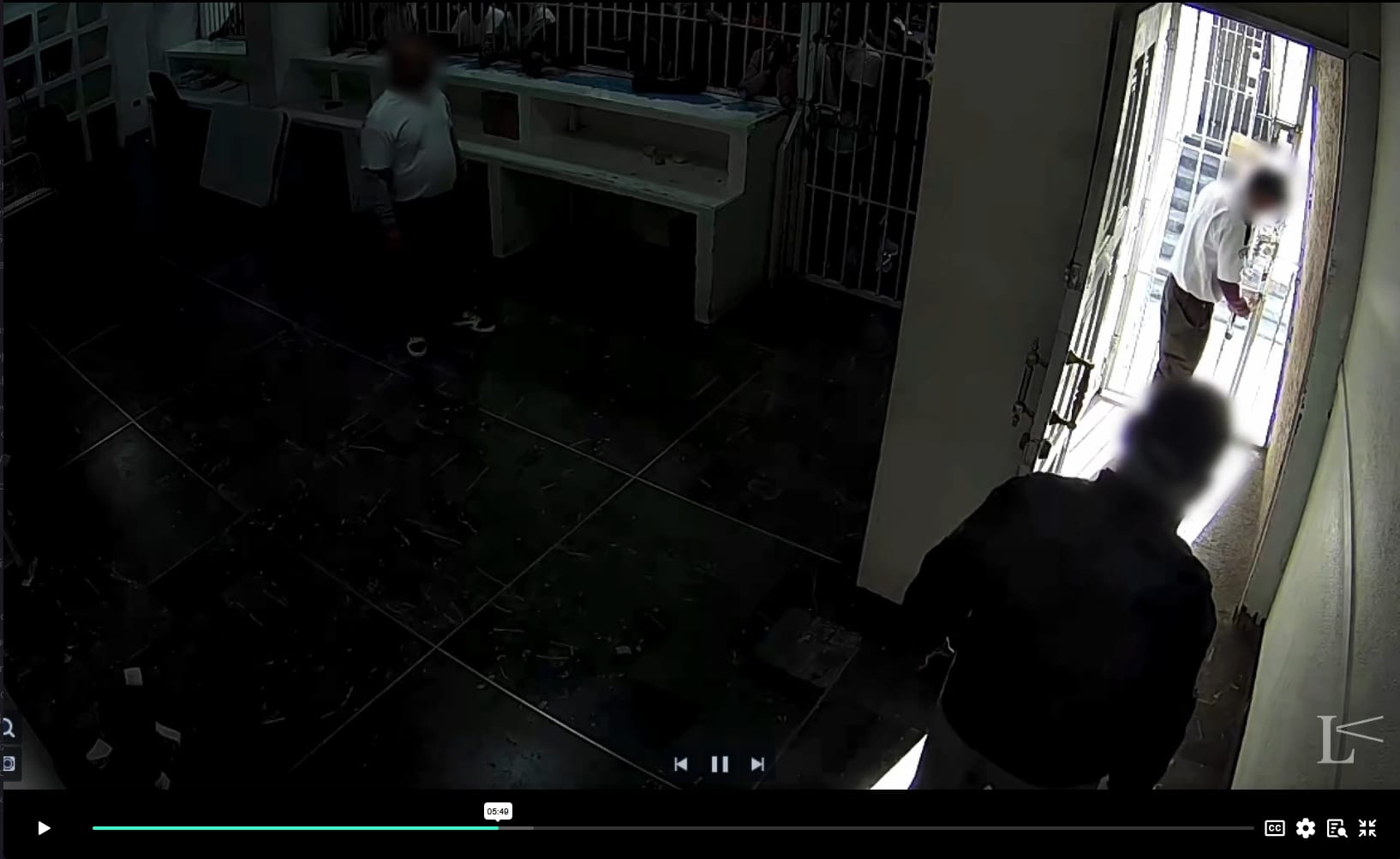 Photomatch
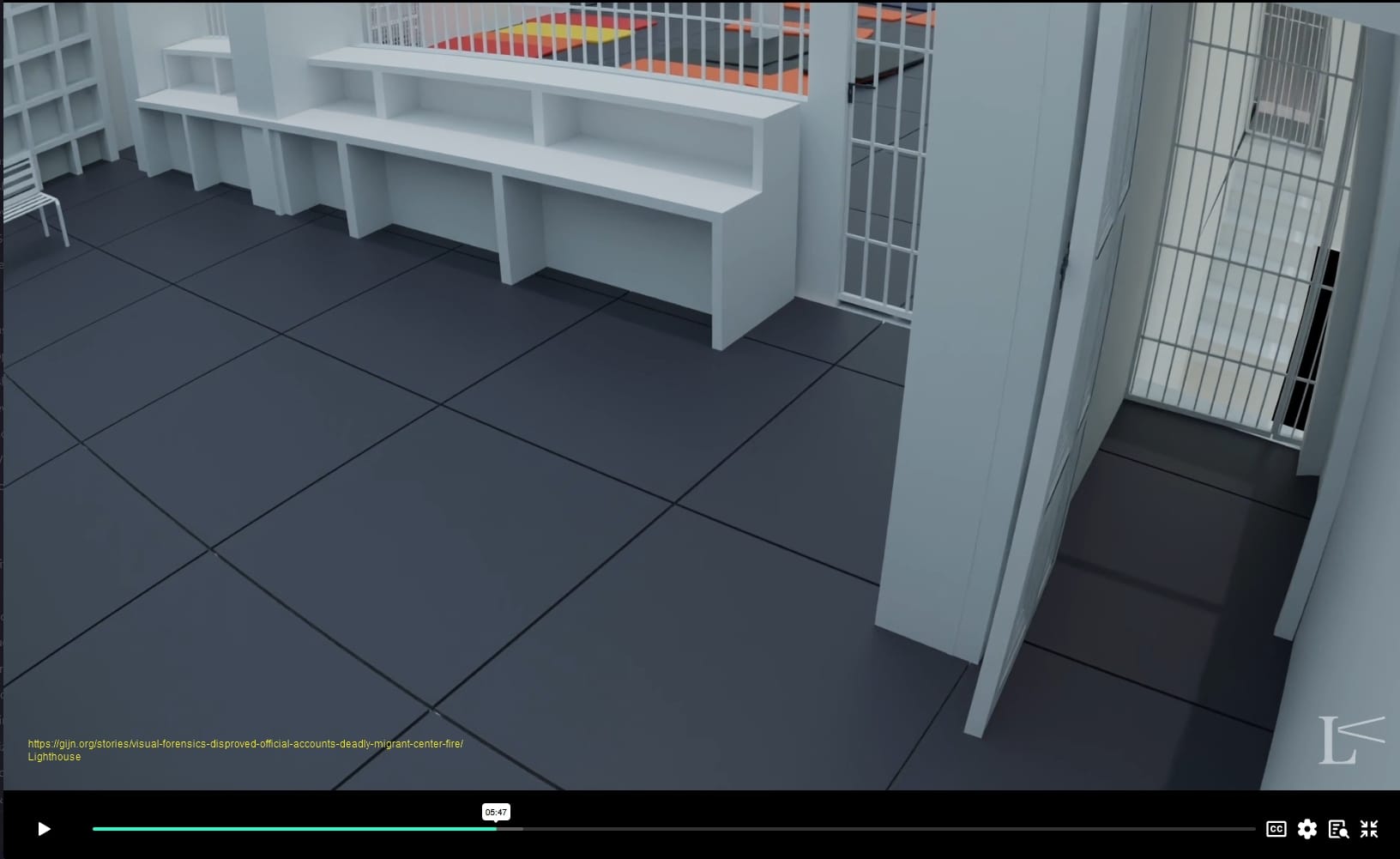 Base Model
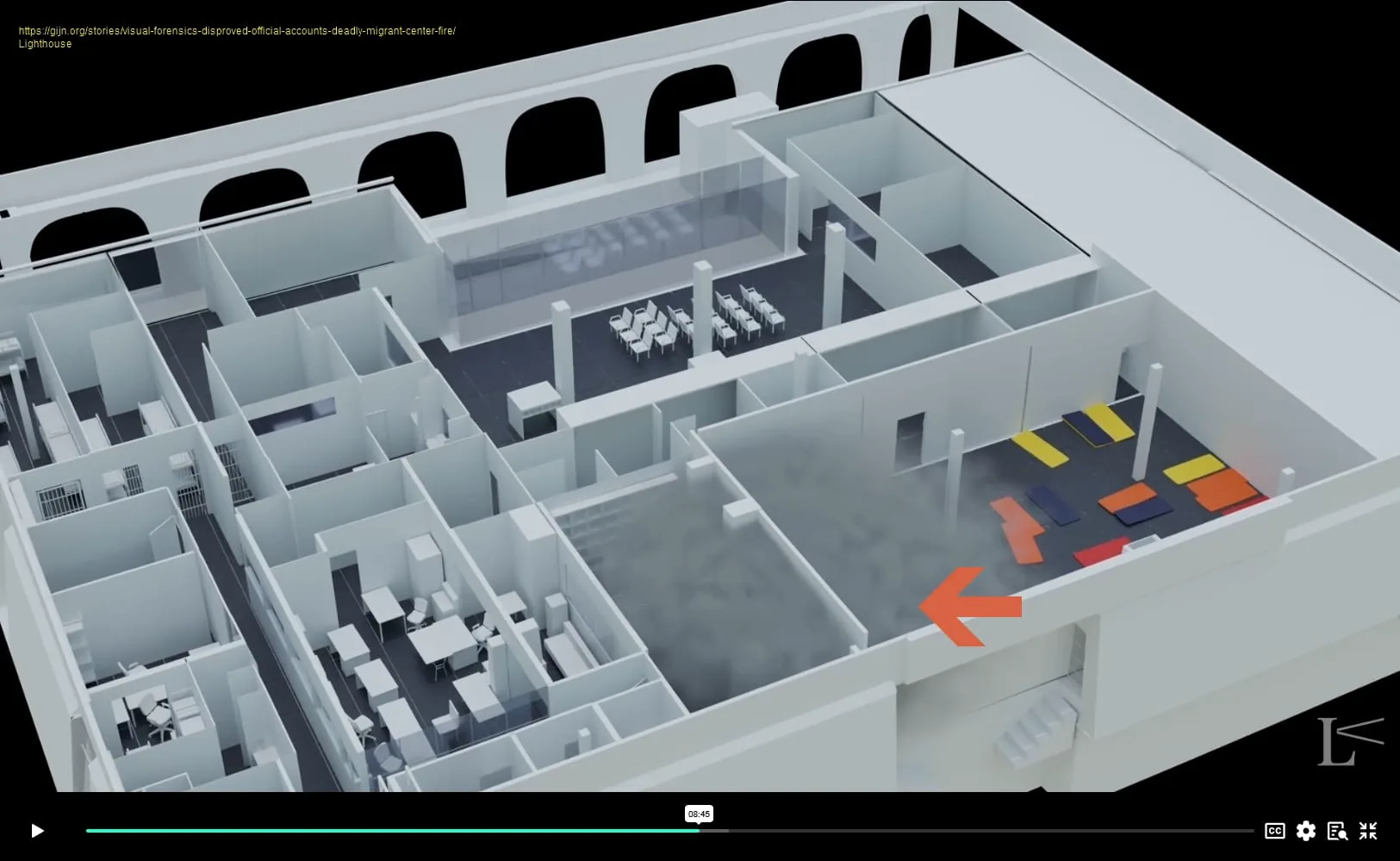 Smoke SimulationA basic smoke simulation was used to recreate the flow of smoke over time.
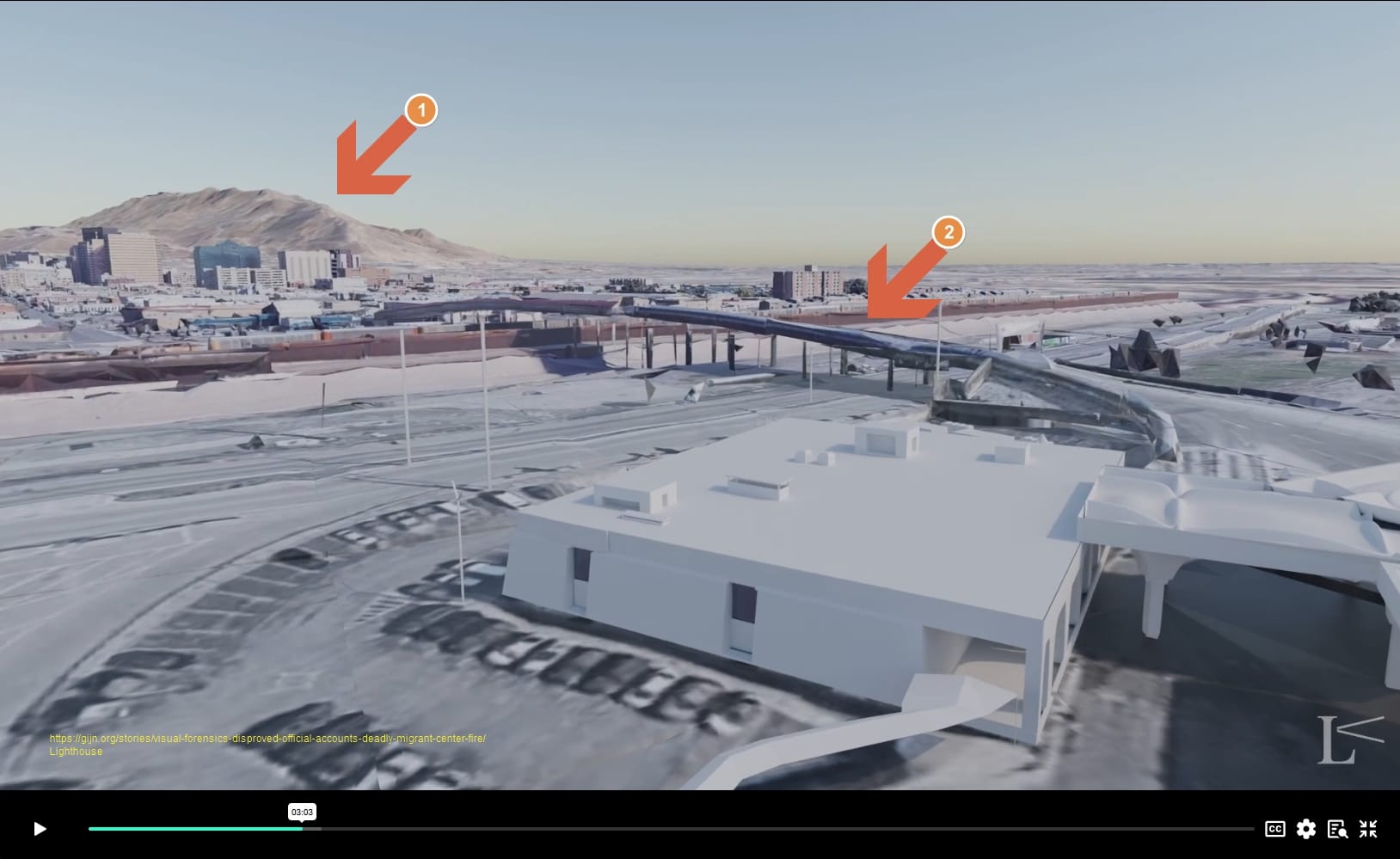
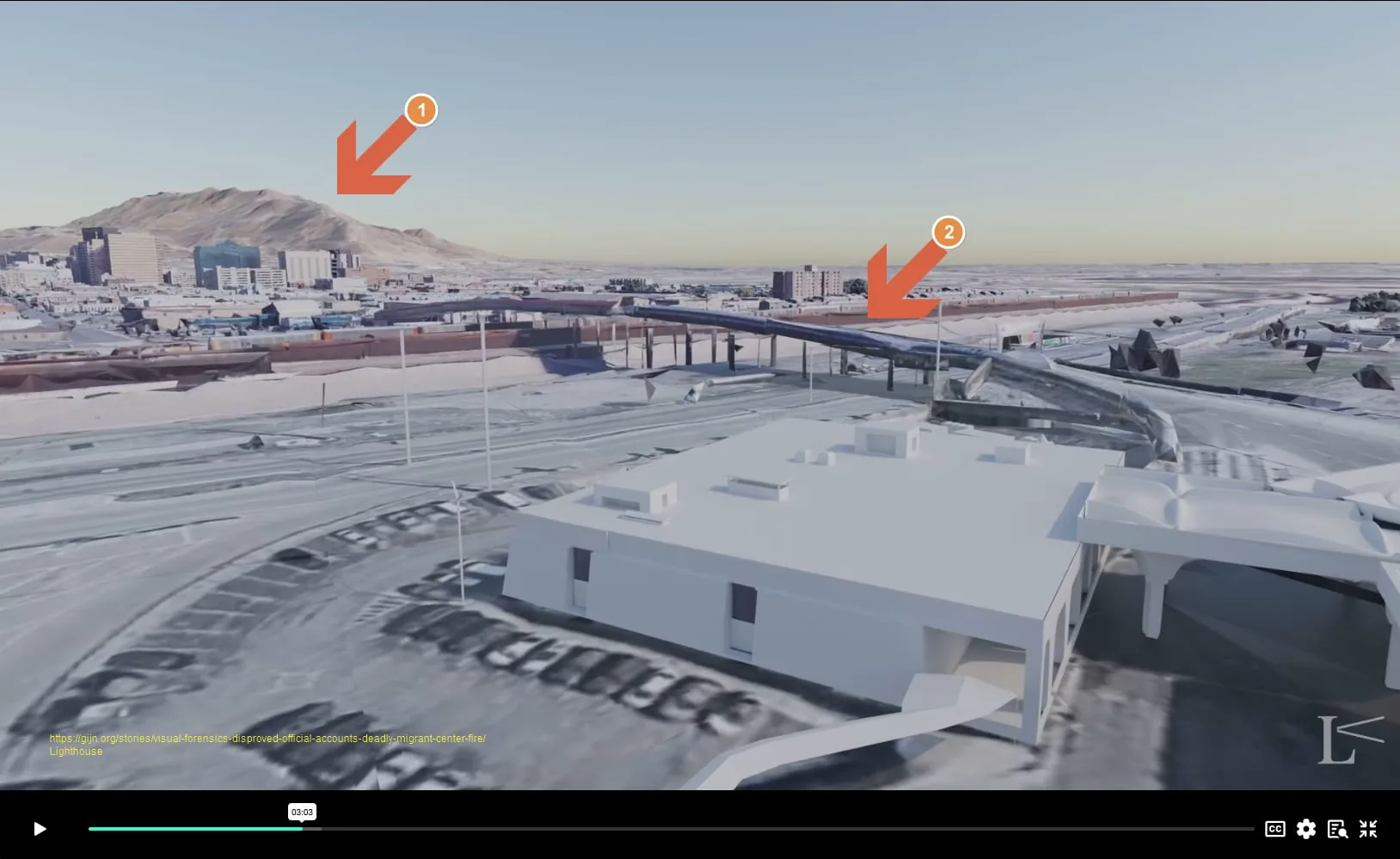 Exterior View'The exterior consisted mainly of “mesh” brought in from the Google Maps Tiles API (2), as well as supplemental terrain data (1);'
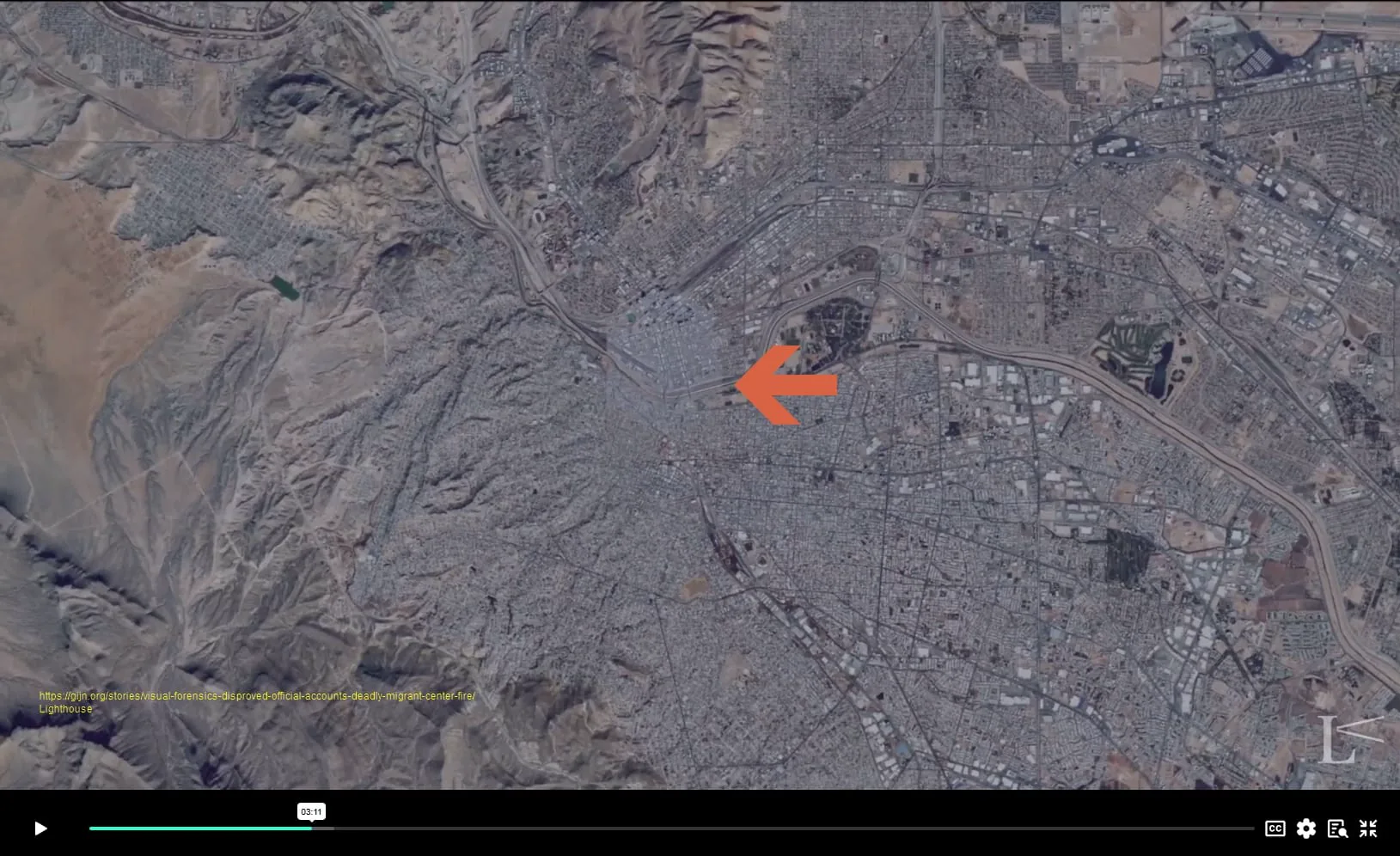 Exterior ViewTwo different maps with different levels of detail layered on top of each otherSmoke SimulationA basic smoke simulation was used to recreate the flow of smoke over time.Exterior View'The exterior consisted mainly of “mesh” brought in from the Google Maps Tiles API (2), as well as supplemental terrain data (1);'
Techniques used (likely)
- Environment: Placed within a photogrammetry-like environment (likely Google Earth/Maps import) with height information on the topography.
- Interior Modeling: "Using various reference sources, including floor plans and footage from the 15 fixed cameras in the building, the team built a 3D model of the detention center."
- Simulation: Smoke simulation was used to test official accounts.
The article provides a detailed description of the modeling methodology:
Sapoch used a variety of methods to build the interior and exterior scenes. The exterior consisted mainly of "mesh" brought in from the Google Maps Tiles API (the same 3D data built into Google Earth), as well as supplemental terrain data; they modeled the interior manually by referencing floor plans and additional reference imagery from inside the building.
"This aspect was much more time-consuming, because we weren't able to access the site ourselves and there were various inconsistencies with the floor plans that we had access to," Sapoch says.
They had access to confidential documents from an unnamed source, and were also able to piece things together with a wealth of layout reference material. Along with the CCTV footage, they had access to post-fire walk-throughs of the building, which provided further information about specific room layouts.
"We were lucky in so far as with the access to all this material, we were able to precisely identify the placement of the CCTV cameras within the layout of the building and essentially bring those exact camera angles into Blender and project the footage as a matched background image," he notes.
Sapoch adds: "An equally large amount of time needs to be dedicated in 3D reconstruction projects like this to more mundane aspects of the workflow — like image matching, setting lighting and materials, animating camera movements, render tests, and so on. It's not a small effort."
Summary
This case is a verification-through-simulation example: an interior reconstruction matched to CCTV camera angles, plus a smoke/flow simulation used to test the official narrative.
Resources
- Photogrammetry — environment capture
- Camera Matching — matching CCTV angles into the model
- Terrain & Landscape Generation — the ground and surroundings
- Direct Modeling — building the interior by hand
Sources
- GIJN — Visual Forensics Disproved Official Accounts of Deadly Migrant Center Fire — the investigation this page follows