Tech4Tracing — 3D-Printable Ammunition Photogrammetry
Provenance
| Source | Organisation & people | Link |
|---|---|---|
| Organisation site | Tech 4 Tracing | tech4tracing.org |
| Replicas on demand (1:1 3D-printed training models) | Tech 4 Tracing | tech4tracing.org |
| Scanning mission | Tech 4 Tracing | tech4tracing.org |
Introduction
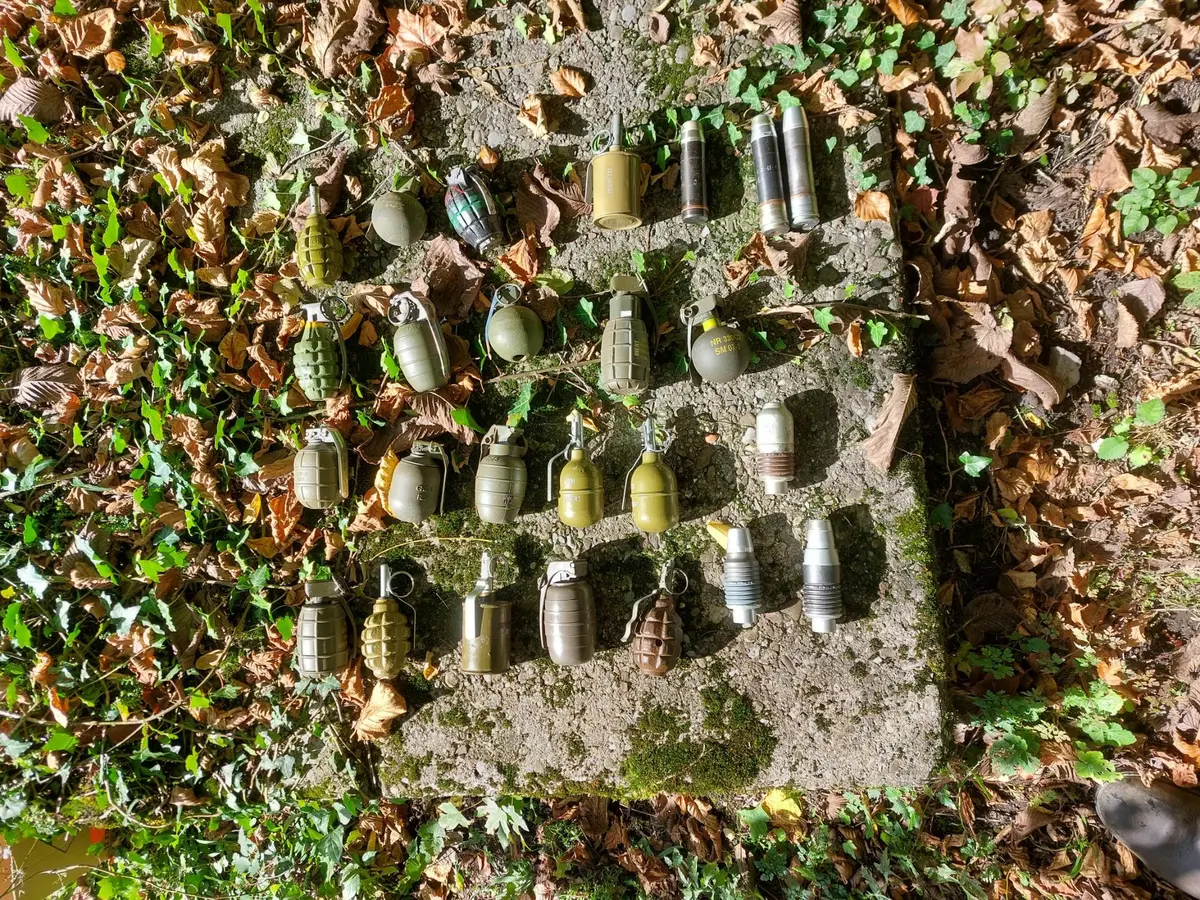
Tech 4 Tracing, a non-profit applied technology lab, builds AI tools against illicit arms and explosives. Its pipeline scans authentic free-from-explosive ordnance with photogrammetry into millimetre-accurate 3D models. Those models become training data and 3D-printable replicas for EOD training and risk education.
Background
Tech 4 Tracing (T4T) is a non-profit applied technology lab that builds AI tools for detecting illicit arms, ammunition, landmines, and explosives. Among their core methods is a distinctive reconstruction pipeline: they use photogrammetry on authentic FFE (free-from-explosive) ordnance to generate 3D models that are accurate enough to act as AI training data, and then turn those reconstructions into rugged 3D-printable replicas for explosive ordnance disposal (EOD) training and explosive ordnance risk education.
How it's likely made
- Photogrammetry capture: scanning authentic FFE ordnance from multiple angles to produce millimetre-accurate 3D reconstructions — visually near-indistinguishable from the real objects.
- Modeling / repair in Blender: cleanup and preparation of the photogrammetry scans for reliable output (mesh repair, retopology, scale).
- 3D-print preparation: preparing the model geometry for physical fabrication so replicas can be ruggedized and used (and potentially taught) in EOD / risk-education training.
Summary
This case is a training-and-replication use of photogrammetry: the same capture-and-reconstruct skill produces physical training aids instead of presentation or evidence. A reconstruction asset has several valid end-uses beyond the screen.
Resources
- Photogrammetry — the capture technique at the core of the pipeline
- Sourcing Models — working from real objects
- 3D Print Toolbox — preparing meshes for print
Sources
- Tech 4 Tracing — the organisation
- Replicas on demand — the 1:1 3D-printed training models
- Scanning mission — capture in the field